Is the Suzuki Swift Worth Buying in South Africa in 2026?
A no-spin look at SA's best-selling imported car — real running costs, the cramped-but-clever interior, resale value and who it's actually for
By Rynard · 25 July 2026
Yes, for buyers who want the lowest possible running costs and bulletproof reliability. The Suzuki Swift was South Africa's best-selling imported passenger car through much of 2026, and one of the top-selling cars overall, thanks to real-world fuel economy near 4.5–5L/100km and a price from around R244,900. It's not for you if you need space for a growing family or want a premium-feeling cabin — the Swift trades size and frills for sheer value and economy.
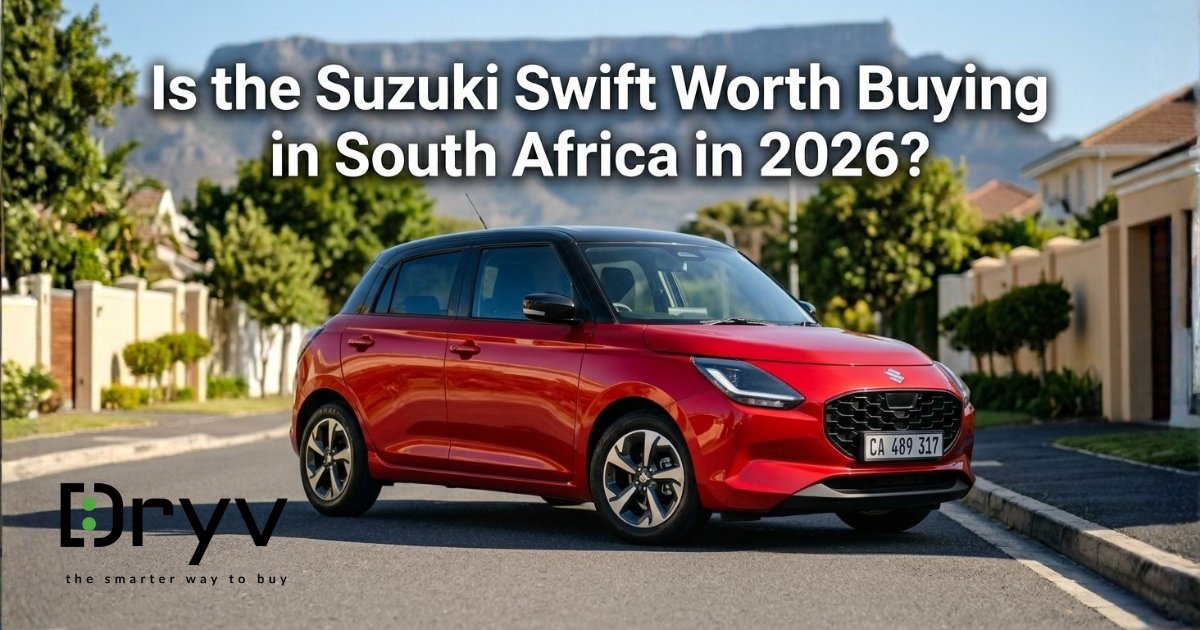
Why the Swift matters in 2026
With petrol 95 sitting around R23 per litre and interest rates only just starting to ease, South African buyers are chasing one thing above all: low running costs. That's exactly why the Suzuki Swift has become a sales phenomenon. It was SA's best-selling passenger car in several months of 2025 and remained the best-selling imported vehicle through much of 2026, finishing as high as third overall on the national charts. When money is tight, the country votes with its wallet — and it keeps voting Swift.
How much does the Suzuki Swift cost in South Africa?
The 2026 Swift range starts at around R244,900 for the entry GL manual and runs to roughly R299,900 for the top GLX auto. That places it right in the heart of SA's most competitive segment, up against the VW Polo Vivo and the Hyundai Grand i10. What sets it apart isn't the sticker price — it's what happens after you drive it off the floor.
The real reason people buy it: running costs
This is the Swift's whole story. Its 1.2-litre engine returns real-world economy of around 4.5–5L/100km — genuinely among the best of any petrol car on sale in SA. At current fuel prices, that's the difference of hundreds of rand a month versus a thirstier rival. Servicing is cheap, insurance is low because the car itself is affordable, and Suzuki's reliability reputation means it rarely springs expensive surprises. Over a few years of ownership, the Swift quietly saves you more than its lower-spec interior ever costs you in comfort.
The honest weakness: space and cabin feel
Here's the part Suzuki won't put on the poster. The Swift is small. Rear legroom is tight for adults, the boot is modest, and if you've got a growing family or regularly carry passengers, you'll feel the squeeze fast. The interior is also built to a price — hard plastics, a basic feel, and fewer soft-touch frills than some newer Chinese rivals in Cape Town that throw in big screens at similar money. The Swift wins on the maths, not the materials. If cabin plushness matters more to you than fuel bills, look elsewhere.
Resale value: the quiet bonus
One thing that softens the basic interior: Suzukis hold their value well in SA. Strong demand, low running costs and a trusted badge mean a well-kept Swift sells quickly second-hand and doesn't haemorrhage value the way some newer, unproven brands might. For a budget buyer, that resale strength is real money back in your pocket down the line.
Who should buy / Who should skip
Buy a Swift if you're a first-time buyer, a student, a commuter, or anyone who wants the cheapest car to actually run day to day — its economy and reliability are hard to beat, and it holds its value. Skip it if you need genuine family space, do lots of long-distance trips with passengers, or want a premium-feeling cabin and big-screen tech for your money. If that's you, a roomier compact SUV — including the value-packed Chery range — may suit you better. Either way, compare live prices from a verified Dryv dealer before you commit.
Browse related cars on Dryv
Frequently Asked Questions
Is the Suzuki Swift worth buying in South Africa in 2026?
Yes, for buyers who put low running costs and reliability first. It returns about 4.5 to 5L/100km in real-world driving from a price around R244,900. The main trade-offs are limited space and a basic cabin.
How much fuel does a Suzuki Swift use?
The 1.2-litre Swift returns roughly 4.5–5L/100km in real-world driving, among the best of any petrol car in SA. At current fuel prices, that translates to meaningful monthly savings over thirstier rivals.
Is the Suzuki Swift a good first car?
Yes. Its low purchase price (from around R244,900), cheap running and servicing costs, strong reliability and good resale value make it one of the best first cars in South Africa. The main downside for some is its small size.
Suzuki Swift or VW Polo Vivo — which is better?
The Swift wins on fuel economy and running costs; the Polo Vivo offers a slightly more substantial feel and SA's biggest parts network. Both hold value well. For pure economy choose the Swift; for a marginally more solid all-rounder, the Polo Vivo.